


THANK YOU FOR SUBSCRIBING
Weekly Brief
Be first to read the latest tech news, Industry Leader's Insights, and CIO interviews of medium and large enterprises exclusively from Healthcare Tech Outlook
A featured contribution from Leadership Perspectives: a curated forum reserved for leaders nominated by our subscribers and vetted by our Healthcare Tech Outlook Advisory Board.

Nuvance Health
Leveraging Technology for Improved Patient Care
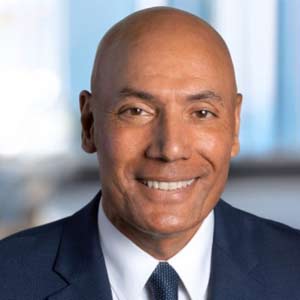
Albert Villarin
Dr. Albert Villarin is a Vice President and Chief Medical Information Officer (CMIO) at Nuvance Health. He leverages technology to create fluid and unobtrusive digital experiences for patients and clinicians and help them overcome challenges. He collaborates with the patient experience team to create a single front door for Nuvance Health’s services through digital solutions, allowing patients to access care conveniently. Before joining Nuvance Health, Dr. Villarin was CMIO at Staten Island University Hospital. He graduated from Harvard University and is currently completing a thesis in health informatics at Northwestern University and a Master of Business Administration from Long Island University this summer
What are your current roles and responsibilities in the healthcare industry and your organization?
I am an emergency physician by board certification and training. In 2006, I became involved with information technology to utilize technology computerization and automation around healthcare and workflow. During that time, the job role of CMIO was new and I served in the position at my first hospital, Einstein Healthcare Network. This was the turning point of integrating technology with clinical care. From that point onwards, I joined the private sector for a couple of years developing clinical decision support tools and integration into the electronic medical record (EMR). Eventually, I returned to healthcare as CMIO at Staten Island University Hospital, part of Northwell Health, for nine years, collaborating with the informatics teams associated with integrated technology.
Three years ago, I joined Nuvance Health as the Vice President, Chief Medical Information Officer. I believe a CMIO should have the combined expertise in clinical, business and informatics to lead the future of healthcare, which is why I decided to pursue an MBA.
How have you seen the industry evolve in recent years, and how do integrating digital health technologies shape the future of patient care?
We are integrating technology into healthcare to enhance patient care and experiences and operationalize efficiencies. The people we care for experience technology in almost every aspect of their lives. They have understood automation, innovation, and efficiencies whether airline travel, hospitality, restaurants, or online shopping experiences. Technology helps us comprehensively understand patient experience, their needs, and expectations for access to proper care and information they need at their convenience. Automation care teams can improve healthcare quality, drive efficiencies and ultimately growth.
"We integrate technology and healthcare operations to improve patient outcomes. We educate our patients and change assumptions by challenging traditional healthcare experiences."
Are there any current initiatives that you are currently working on?
One of our biggest achievements is the advent of artificial intelligence (AI), which I also term augmented intelligence. It is not truly artificial because as it is designed using clinical information; it results in a collaborative understanding of a patient’s present state and the information that may not be obvious from evidence-based medicine. It provides efficient and adequate knowledge to clinicians to improve patient care. In the last several months, the integration of AI into clinical workflow has become a major area of focus, creating high-level governance from clinical, operational, and security perspectives.
While implementing the latest technologies like AI, are there any challenges leaders like you face today?
Clinicians face challenges in understanding the utility of AI, its security parameters, and the cloud storage of their patient health information. We must incorporate these aspects well, especially policy and protocol, along with guiding the clinicians within their embedded workflow. We don’t want them to be impulsive learners. We want the support of AI, machine learning, and natural language modeling in the back-end processing, making the front-end experience seamless and supportive from the patient's perspective; it is vital to gain patients’ trust as AI may be confusing or intimidating for some. We are working on building trust for patients, continuing the security of their personal data, and creating an environment of support for AI within the healthcare network. We ensure that the integration of AI will enhance care and trust among the patients.
What are the best ways to overcome the challenges, and what would be one key advice for young professionals in the industry?
Unity is the best way to overcome all the difficulties many healthcare systems are encountering regarding the integration of technology into patient care. We must collaborate on our best practices, educate patients through research, committees, and meetings, and facilitate interactive engagement. We strive to bring best practices to patients, actively listen to them, and create patient advisory committees.
Since technology is still budding in our industry, we should join hands with experienced organizations in this field who can help progress healthcare for everyone. Industry leaders like Google, Amazon, Oracle, and IBM will be fully integrated into healthcare in the coming years. The outcome of this collaboration should be solely to support patient care.
Over the last 20 years, the relationship between clinicians and patients has broadened due to the inefficient reliance on technology. It is time to bridge this gap and efficiently leverage AI, where 80% of the operation would be automated. The remaining 20% of the healthcare tasks should be handled by clinicians for improved patient care outcomes.
The articles from these contributors are based on their personal expertise and viewpoints, and do not necessarily reflect the opinions of their employers or affiliated organizations.
